
Rule of thumb: use a silicone-based lubricant on moving metal parts twice a year, and never use WD-40 or household grease as a long-term fix. The exceptions are a few spots that use factory-applied lithium grease and the track itself, which should stay dry and clean rather than lubricated. Get those few details wrong and you'll attract dust, pollen, and salt residue right back onto the parts you just cleaned.
What You'll Need
- A silicone-based garage door lubricant spray (not an all-purpose oil)
- A small tube of white lithium grease for specific contact points
- Clean, lint-free rags
- A soft brush or old toothbrush for tight spots
- Safety glasses
- A sturdy stepladder
Step-by-Step: Lubricating Your Garage Door
- Close the door and disconnect the opener. Pull the manual release cord so you can move the door by hand without the motor engaging.
- Wipe down the tracks first, but don't lubricate them. Use a dry rag to remove dust, salt film, and pollen buildup. Tracks need to stay clean and dry; lubricant on the track just collects grit and makes rollers slip.
- Spray the hinges. Apply silicone lubricant to each pivot point where the hinge sections meet, working the door up and down a few inches to let it work into the joint.
- Treat the rollers at the bearing, not the wheel. If you have steel rollers with visible bearings, a light spray at the bearing is fine. Nylon rollers (common on newer doors) usually need little to no lubrication on the wheel itself — over-oiling nylon just gums up with dust.
- Coat the springs lightly. Run a thin film of silicone lubricant along the coils of the torsion spring above the door, or the extension springs along the upper tracks. Wipe off any drips so it doesn't run down onto the floor or door panels.
- Lubricate the lock, armbar, and opener rail. A small amount of lithium grease on the lock mechanism and a silicone spray on the opener's chain or screw-drive rail keeps everything moving smoothly.
- Reconnect the opener and test. Run the door through a full open-close cycle and listen for any remaining grinding, squeaking, or hesitation.
What a Homeowner Can Safely Handle
Everything above — hinges, rollers, tracks cleaning, lock mechanism, and opener rail — is reasonable DIY work with basic tools and about 20 minutes.
What Needs a Technician
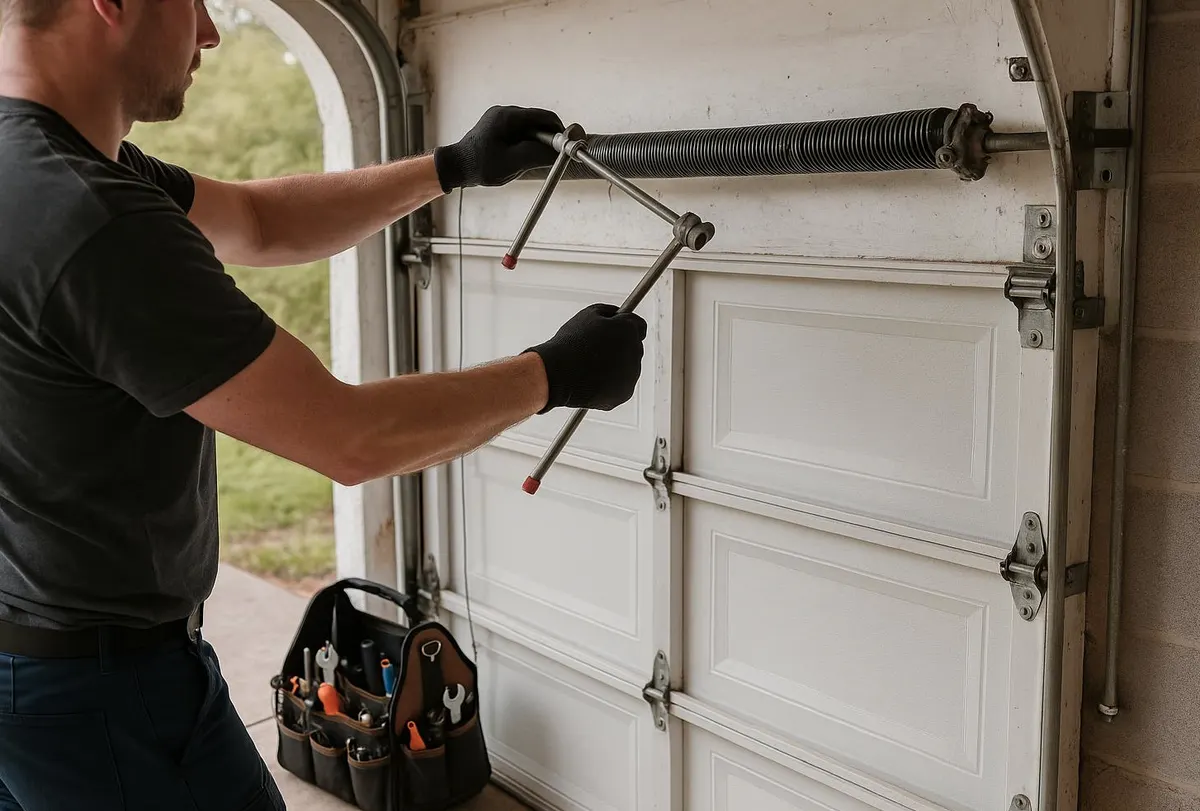
Do not attempt to adjust, tighten, or remove a torsion spring, even to lubricate it more thoroughly. These springs are under heavy tension and have caused serious injuries when handled without the right bars and training. If you notice a visibly stretched or gapped spring coil, a frayed cable, a bent track, or a door that drops suddenly when the release is pulled, stop and call a professional rather than continuing with routine maintenance.
Products to Use and Products to Avoid
- Use: silicone-based garage door lubricant spray — it doesn't attract dust and holds up well in humidity.
- Use: white lithium grease, but only on lock cylinders and specific grease-fitting points, not on rollers or tracks.
- Avoid: WD-40 as a long-term lubricant. It's a solvent and light penetrant, useful for loosening rust, but it evaporates quickly and leaves parts drier than before.
- Avoid: motor oil or cooking oil. Both are too thin, run off the part, and mix with dust into a gritty paste.
- Avoid: heavy grease on nylon rollers or tracks. It just becomes a magnet for sand and pollen common in this area.
Why This Matters More in This Climate
Salt air near the coast and near-daily humidity speed up corrosion on hinges, springs, and roller bearings faster than in drier climates. Afternoon downpours during the wet season also push moisture into tracks and hardware, which is exactly where rust starts. A door that's properly lubricated moves with less friction, which matters if you ever need to operate it manually during a power outage in a storm. Doors that are stiff or rusted from neglect are also more likely to bind under the added wind-load stress that coastal garage doors are built to withstand — lubrication alone won't fix a wind-load issue, but a door that moves freely puts less strain on the hardware holding it together.
When to Call Port St. Lucie Garage Door Experts
If lubrication doesn't quiet a noisy door, if a spring looks worn or stretched, or if the door feels heavier to lift than it used to, it's time for a professional look. Our technicians handle Garage Door Spring Repair and full Garage Door Maintenance & Tune-Up visits that go beyond what a spray can and a rag can fix — checking cable tension, track alignment, and hardware wear that's common after a Florida summer. We'll diagnose honestly and tell you if it's a quick fix or something bigger before we touch anything.
If your garage door in Port St. Lucie, Fort Pierce, Stuart, or anywhere else on the Treasure Coast needs a closer look, call Port St. Lucie Garage Door Experts for fast, honest service.