
The call that starts this argument every week
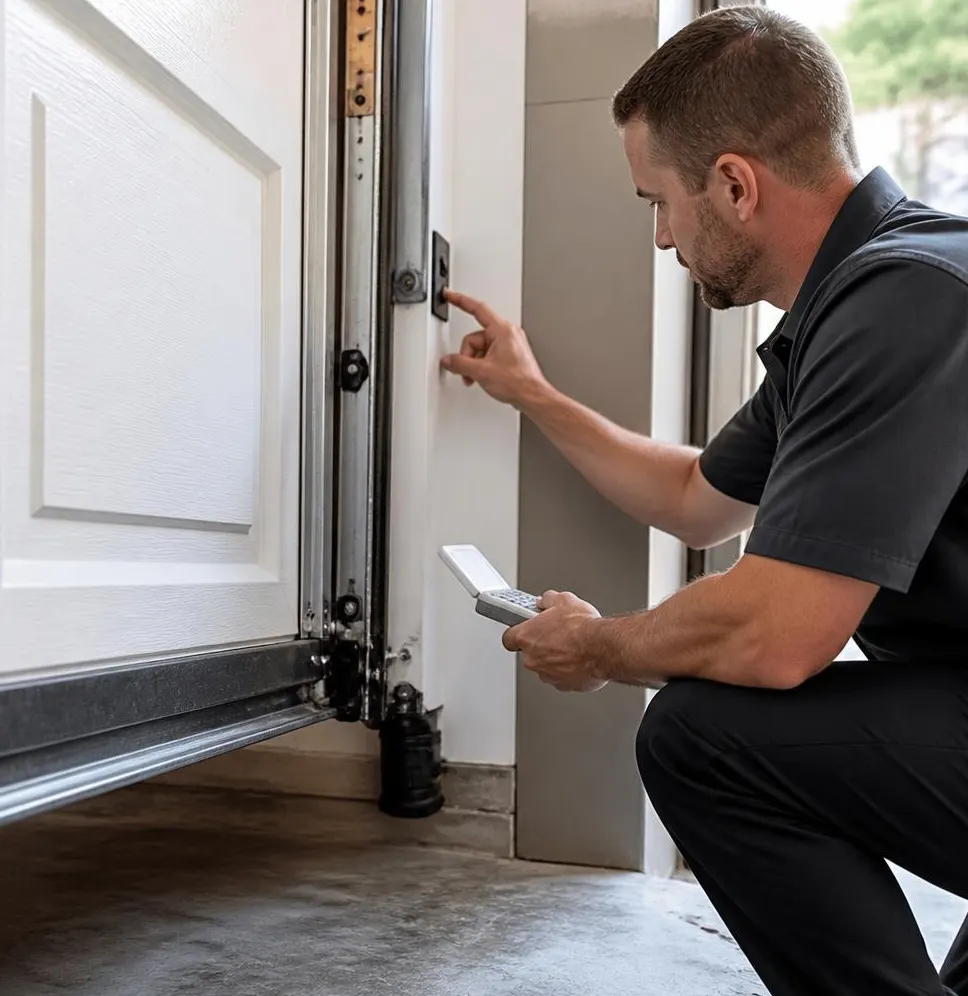
A technician shows up to a house off a quiet cul-de-sac because the garage door opener just quit. The homeowner is standing there with two theories: either the opener is "ancient" and needs replacing, or their spouse never maintained it and ruined it early. Nine times out of ten, the truth is something nobody thought to blame — a worn-out part that had a normal lifespan, plus a few months shaved off by heat, humidity, or salt air doing what it does on the Treasure Coast. This is usually the moment one spouse turns to the other and says "see, I told you." Here’s the actual answer, so you can settle it without a repair bill as the tiebreaker.
What actually wears out, and when
A garage door system isn’t one object with one lifespan — it’s several parts aging on different clocks.
- Torsion springs are rated in cycles (one cycle = door up and down once). A standard spring is good for roughly 10,000 cycles. For a door used two or three times a day, that’s commonly somewhere in the 7 to 10 year range, though homes with teenagers, home businesses, or multiple vehicles can burn through that faster.
- The door panels themselves (steel, wood, or composite) can last 20 to 30 years structurally if they’re not damaged by impact, rust, or warping.
- Cables, rollers, and hinges are wear items, generally replaced every several years as part of normal upkeep — they’re not meant to last the life of the door.
- The opener (the motor unit on the ceiling) typically lasts 10 to 15 years before the drive mechanism, circuit board, or sensors start failing.
So when someone asks "how long does a garage door last," the honest answer is: it depends which part you’re asking about. The door can outlive three openers and two sets of springs.
What shortens that lifespan around here
Treasure Coast conditions are harder on garage doors than the national averages assume, which is why doors here sometimes need attention earlier than the textbook numbers suggest.
Humidity and heat
Constant moisture in the air causes metal components to swell, bind, and corrode faster than they would in a dry climate. Hinges and rollers that would glide for years elsewhere can start sticking or squealing sooner. Heat also softens lubricants and accelerates the breakdown of weatherstripping and seals.
Salt air
Homes closer to the coast — Jensen Beach, Hobe Sound, and similar areas — deal with salt-laden air that speeds up rust on springs, tracks, and hardware. Rust doesn’t just look bad; it adds friction, which makes the opener and springs work harder every single cycle, wearing them out faster than their rated lifespan assumes.
Hurricane-season stress
Wind-load events put real force on a garage door, even when it holds. Doors built or reinforced to local wind-load standards handle this well, but older doors without reinforcement can flex, loosen hardware, or develop subtle track misalignment after a rough storm season. That stress adds up year over year.
Afternoon downpours and sudden temperature swings
A door baking in sun all day, then hit with a fast-moving afternoon storm, expands and contracts repeatedly. Over years, this cycle loosens fasteners and can warp lighter-gauge panels.
What extends it
None of the above means a garage door is doomed to a short life here — it means maintenance matters more in this climate than it does inland or up north.
- Routine tune-ups catch rust, loose hardware, and misalignment before they turn into a failed spring or a jammed opener.
- Balance checks matter because a door that’s out of balance makes the opener's motor work harder on every cycle, shortening its life even if the door itself looks fine.
- Keeping tracks clear and aligned prevents the kind of binding that strains cables and rollers.
- Addressing rust early, especially on coastal homes, stops surface corrosion from becoming a structural weak point in a spring or hinge.
- Not ignoring small noises or hesitation — a door that groans, jerks, or opens unevenly is telling you something is already working harder than it should.
So who’s right?
If the door is 12 years old and the opener just failed, that’s not evidence of neglect — that's roughly on schedule, maybe even a little ahead of the curve for this climate. If the springs snapped at 5 years and the door's been slammed around in and out daily, there could be a maintenance gap. The fair answer in most arguments is: it's the house, the usage, and the weather working together, not any one person's fault. Feel free to read that last sentence out loud to whoever needs to hear it.
When to call Port St. Lucie Garage Door Experts
If a door is dragging, unbalanced, rusted at the springs, or an opener is grinding, reversing, or failing to respond, it’s worth having it looked at before a part fails completely and the door gets stuck open or shut. Our Garage Door Maintenance & Tune-Up service is built around exactly this — checking balance, hardware, rollers, and rust points so small issues don't turn into an emergency call. If a spring has already gone or an opener is on its last legs, our Garage Door Spring Repair and opener installation teams handle it the same day in most cases, with honest advice on whether a repair or a full replacement makes more sense for the door's age and condition.
If your garage door or opener has been acting up, or you just want a straight answer on how much life is left in it, call Port St. Lucie Garage Door Experts. We serve Port St. Lucie, Fort Pierce, Stuart, Jensen Beach, Tradition, Palm City, Hobe Sound, and Vero Beach, and we'll give you the real diagnosis, not a sales pitch.